2026-10-24 ·
Access and Soil Challenges During Restoration Near Portuguese Bend
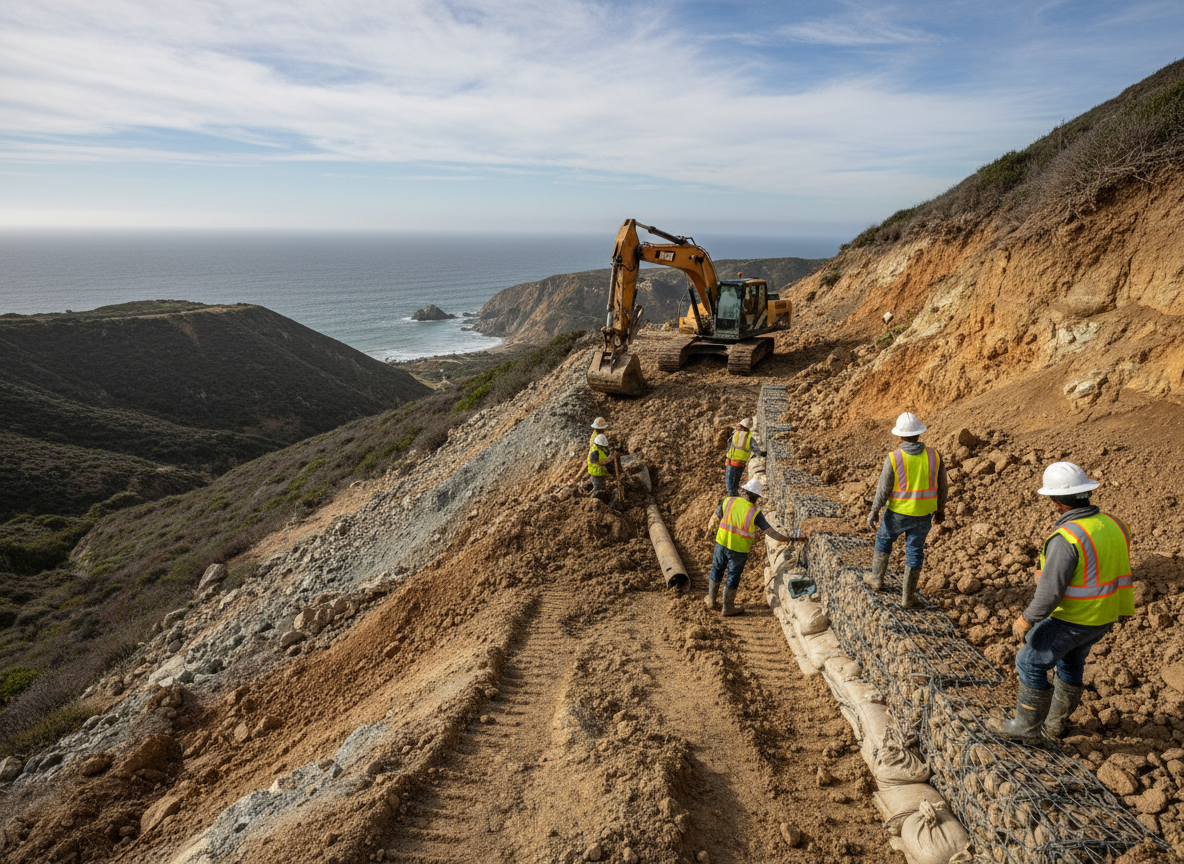
Restoration teams face restricted vehicle access and shifting clay soils when addressing water damage near Portuguese Bend, often extending project timelines by several days compared to flatter neighborhoods like Seaview. These factors stem directly from the area's landslide history and coastal bluff geology within Los Angeles County.
Steep Terrain and Limited Road Access
Portuguese Bend sits along the Rolling Hills Estates border where winding residential streets and private drives often narrow to single lanes. Crews transporting extraction equipment or dehumidifiers must stage vehicles at turnouts near Terranea Resort or Point Vicente Lighthouse, then carry gear downhill on foot or with smaller carts. This setup adds time when responding to calls from homes overlooking Abalone Cove Shoreline Park. Pacific Ocean breezes keep temperatures moderate year-round, yet they do little to improve traction on unpaved access paths after rain. Operators familiar with the route plan extra hours for mobilization, especially when working near Los Verdes Golf Course where property lines sit close to the bluff edge.
Clay Soils and Persistent Moisture Retention
The underlying soils in Portuguese Bend contain high percentages of bentonite clay that swell when wet and retain water far longer than sandy soils found closer to San Pedro. After a plumbing leak or roof intrusion, this retention keeps subflooring and crawl spaces damp for weeks, raising the risk of secondary mold growth. Restoration teams monitor moisture readings at multiple depths because surface drying can mask pockets of saturation several inches below grade. Homes along the border with Rolling Hills Estates frequently sit on filled slopes that channel runoff toward foundations, requiring targeted trenching before full drying can begin. The mild Mediterranean climate moderated by ocean breezes slows evaporation rates even on clear days, so crews rely on sealed containment and continuous airflow rather than open windows.
Equipment Staging and Safety Protocols
Narrow driveways and unstable shoulders near Portuguese Bend limit the size of portable generators and air movers that can be positioned on site. Teams often establish a secondary staging area in nearby Palos Verdes Estates or Rolling Hills to stage larger water extraction units, then shuttle materials as needed. Safety briefings emphasize slope monitoring because even light foot traffic can trigger minor soil movement during saturated periods. Work near Terranea or Seaview properties includes daily checks for new cracks in retaining walls before placing any drying equipment on decks or patios. These steps protect both the crew and the structure while maintaining steady progress on water damage mitigation.
Coordination with Local Conditions
Effective restoration near Portuguese Bend requires advance checks of recent landslide activity reports and soil moisture data from Los Angeles County sources. Crews coordinate with property owners on access windows that avoid peak tourist traffic around Point Vicente Lighthouse. When linking drying efforts to broader site work, teams reference established protocols such as those outlined in water damage mitigation practices to ensure consistent results across multiple visits. Readers can also review related guidance on marine layer effects and plumbing leak response for additional context on local moisture patterns.